
AI Trends 2026
Five key AI trends affecting CIOs.
AI risks. AI rules. AI rewards.
AI evolves, and the world shifts with it. Discover the forces reshaping IT in 2026.
CIOs and IT leaders must leverage AI opportunities without compromising ambitious goals, core values, or secure and responsible governance. Our annual AI Trends report is your strategic lens on where AI is headed next – and what to do about it.
From agentic AI to sovereignty regulations, this research cuts through the hype to deliver actionable insights on the five AI trends that will impact IT most in 2026 and beyond.
Five AI trends will shape IT in 2026
Our report unpacks the macro trends shaping AI and ties each one back to IT strategy, governance, and transformation.
1. Foundational AI principles will rewrite organizational DNA
Enterprises will develop their own guiding AI principles to address rising AI risk and align their AI strategy around core organizational values.
2. From copilots to vibe coding: AI will continue to reinvent IT
New categories of enterprise AI tools will emerge, propelling many organizations toward a crucial decision: AI platform or best-of-breed AI tools?
3. Agentic AI will come of age and power the exponential enterprise
Adoption of agentic AI will grow faster than generative AI, powering exponential growth and change across organizations while bringing new opportunities and risks.
4. Risk management will be the price of admission for AI
The potential risks of new AI applications will drive organizations to adopt AI risk management programs, even in jurisdictions with no regulatory requirement.
5. AI will hang in the balance between freedom and control
AI sovereignty will become top of mind for regulators, but legislative policies will develop in a disjointed fashion around the world.
Frequently Asked Questions
What is AI Trends 2026?
AI Trends 2026 is Info-Tech Research Group's annual strategic report identifying five key AI trends that will impact IT leaders in 2026 and beyond. Based on Info-Tech's Future of IT 2026 survey (n=700+), the report cuts through hype to deliver actionable insights on foundational AI principles, emerging AI tools, agentic AI adoption, risk management programs, and AI sovereignty regulations.
What are the five AI trends shaping IT in 2026?
According to Info-Tech Research Group, the five AI trends shaping IT in 2026 are: (1) foundational AI principles will rewrite organizational DNA, (2) AI will continue to reinvent IT from copilots to vibe coding, (3) agentic AI will come of age and power the exponential enterprise, (4) risk management will be the price of admission for AI, and (5) AI will hang in the balance between freedom and control through sovereignty regulations. Info-Tech's report provides strategic recommendations for CIOs to navigate each trend.
What are foundational AI principles?
Foundational AI principles are organizational governance standards that govern the development, deployment, and maintenance of AI applications to mitigate possible risks. Info-Tech Research Group identifies candidate principles including safety and security, data privacy, explainability and transparency, validity and reliability, fairness and bias detection, accountability, sustainability, human agency and autonomy, environmental impact, contestability, and intellectual property protection. These principles are selected and customized to reflect the organization's guiding principles and form the core of Info-Tech's AI governance framework.
How do foundational AI principles differ from strategic AI principles?
Info-Tech Research Group distinguishes between strategic AI principles and foundational AI principles in their AI strategy framework. Strategic AI principles align the business strategy with the AI strategy and reflect the organization's overall approach to using AI. Foundational AI principles, by contrast, govern the development, deployment, and maintenance of AI applications to mitigate possible risks from deploying AI-based applications. Both principle types work together to ensure AI initiatives deliver value while addressing organizational values and risk management requirements.
What percentage of organizations have implemented foundational AI principles?
According to Info-Tech Research Group's Future of IT Survey (2025, n=258), over half of respondents have implemented or are in the process of implementing foundational AI principles in their organization to address possible risks associated with AI applications. Specifically, 35% are currently assessing the principles and in early stages of implementation, and 70% of respondents feel prepared to fully prepared to operationalize their foundational AI principles. Notably, no respondents viewed AI safeguards as an impairment to innovating with AI.
What percentage of organizations have a formal AI strategy?
According to Info-Tech Research Group's Future of IT Survey (2025, n=260), 23% of organizations have a corporate-wide AI strategy in place (an increase of 15 percentage points compared to the previous year), while 26% have an AI strategy in place for some business areas (an increase of seven percentage points). Additionally, 34% reported their AI strategy is being developed or will soon be developed (a decrease of six percentage points). Info-Tech's data shows that developing formal AI strategy is a growing trend, though still relatively new for most organizations.
How should AI strategy be aligned with organizational strategy?
Info-Tech Research Group recommends that a business-driven AI strategy be aligned with the organizational strategy through four key components: (1) AI Vision—a forward-looking, aspirational statement reflecting commitment to leveraging AI for positive and responsible outcomes, (2) Value Drivers—ways value is recognized by the organization to ensure candidate AI initiatives align to organizational goals, (3) Strategic AI Principles—guiding principles that align business strategy with AI strategy, and (4) Foundational AI Principles—governance standards for developing, deploying, and maintaining AI applications. This framework ensures AI initiatives trace back to organizational objectives.
What is agentic AI and why does it matter for CIOs?
Agentic AI refers to AI systems that can act autonomously to accomplish tasks and make decisions with minimal human intervention. Info-Tech Research Group predicts that adoption of agentic AI will grow faster than generative AI in 2026, powering exponential growth and change across organizations while bringing new opportunities and risks. Info-Tech recommends that IT leaders select business-driven use cases for agentic AI and include human oversight when developing agentic AI applications to balance innovation with responsible governance.
What are the main opportunities and risks of AI strategy in 2026?
Info-Tech Research Group identifies five key opportunities from AI strategy: accelerated AI deployments, improved customer experience, talent attraction and retention, innovation and growth, and increased employee productivity and effectiveness. The corresponding risks include possible job displacement, overreliance on AI systems, creation of deepfakes for identity theft or fraud, misalignment with foundational AI principles, and possible privacy breaches with the use and sharing of data. Info-Tech's framework helps organizations maximize opportunities while implementing safeguards to mitigate these risks.
Why is AI risk management becoming mandatory?
According to Info-Tech Research Group's AI Trends 2026 report, the potential risks of new AI applications will drive organizations to adopt AI risk management programs even in jurisdictions with no regulatory requirement. Risk management is becoming the price of admission for AI because organizations recognize that AI applications can introduce new risks related to bias, privacy breaches, security vulnerabilities, and misalignment with organizational values. Info-Tech recommends implementing a risk management program focused on delivering value while mitigating potential AI risks, regardless of the legislative environment.
What is AI sovereignty and how will it affect organizations?
AI sovereignty refers to the control that nations and regions seek to exercise over AI systems, data, and infrastructure within their jurisdictions. Info-Tech Research Group predicts that AI sovereignty will become top of mind for regulators in 2026, but legislative policies will develop in a disjointed fashion around the world. This creates a challenge where AI will hang in the balance between freedom and control. Info-Tech recommends that organizations develop an adaptive AI governance framework to provide safeguards and self-regulate regardless of the legislative environment.
What are the key actions IT leaders must take according to AI Trends 2026?
Info-Tech Research Group's AI Trends 2026 report identifies five key actions for IT leaders: (1) establish foundational AI principles to address AI risks and reflect strategic principles, (2) adopt a solution-centric approach and focus on driving business value with AI tools that align to foundational AI principles, (3) select business-driven use cases for agentic AI and include human oversight when developing agentic AI applications, (4) implement a risk management program focused on delivering value and mitigating potential AI risks, and (5) develop an adaptive AI governance framework to provide safeguards and self-regulate regardless of the legislative environment.
What survey data supports Info-Tech's AI Trends 2026 report?
Info-Tech Research Group's AI Trends 2026 report is based on the Future of IT 2026 survey conducted in May and June 2025, with over 700 survey responses from IT leaders. Most respondents were in North America, though countries around the globe were represented. Over half of respondents held director-level or more senior positions. Industries represented include Government/Public Sector, Financial Services & Insurance, Education, Manufacturing, Professional & Technology Services, Utilities, Healthcare, Professional Associations & Nonprofits, Transportation & Logistics, and Retail, among others.
How are organizations evolving their AI governance requirements?
Info-Tech Research Group emphasizes that foundational AI principles continue to evolve as organizations' enterprise governance requirements evolve. Organizations should consider candidate foundational AI principles such as sustainability (designing AI systems to be more energy efficient), human agency and autonomy (using AI systems that augment human performance), environmental impact (designing AI for positive environmental outcomes), contestability (enabling individuals to challenge AI decisions), intellectual property protection, and additional principles that address compliance or are customized for the organization or industry. Info-Tech's approach ensures foundational AI principles are core to the organization's AI governance program and used to identify risk categories for AI risk management.
What is the relationship between AI tools and enterprise AI platforms?
According to Info-Tech Research Group's AI Trends 2026 report, new categories of enterprise AI tools will emerge in 2026, from copilots to vibe coding solutions, propelling many organizations toward a crucial decision: AI platform or best-of-breed AI tools. The ecosystem of AI solutions for IT will grow with the introduction of new categories. Info-Tech recommends that IT leaders adopt a solution-centric approach that focuses on driving business value with AI tools and applications that align to foundational AI principles, rather than choosing technology first.
FIVE AI TRENDS FOR 2026
This report highlights five key AI trends in emerging and leading-edge technologies and practices, offering actionable insights that can help guide your organization toward its strategic goals.
-
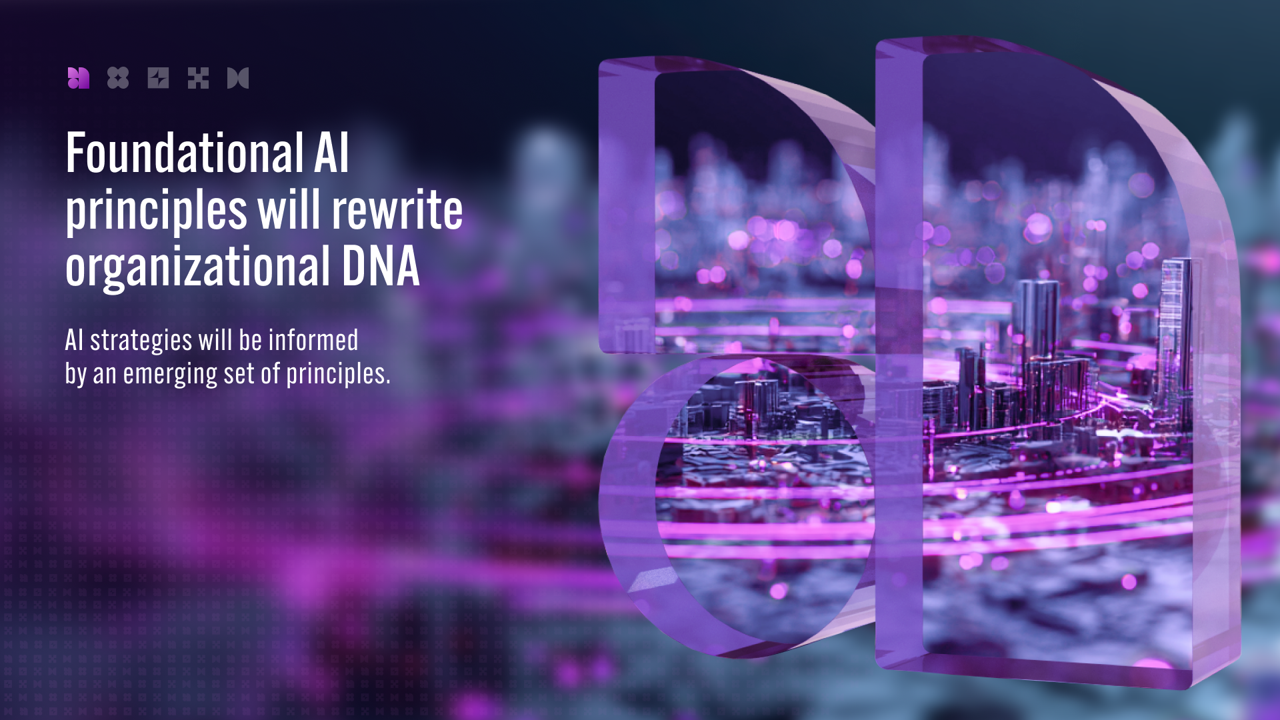
Foundational AI principles will rewrite organizational DNA
AI strategies will be informed by an emerging set of principles. -
From copilots to vibe coding: AI will continue to reinvent IT
The ecosystem of AI solutions for IT will grow with the introduction of new categories. -
Agentic AI will come of age and power the exponential enterprise
Agentic AI will increase in adoption and enable outcomes across the organization, powering exponential growth and change. -
Risk management will be the price of admission for AI
Adoption of AI risk management programs will be driven by the potential new risks that AI applications can introduce. -
AI will hang in the balance between freedom and control
AI sovereignty will become top of mind for regulators.
Over 700 survey responses from IT leaders
The Future of IT 2025 survey
The AI Trends 2026 report is based on the Future of IT 2026 survey conducted in May and June 2025.
Most respondents were in North America, but countries around the globe were represented.
Over half of respondents held director-level or more senior positions.
Industries represented include (Industries representing less than 1% of survey respondents not listed here.):
- Government/Public Sector
- Financial Services & Insurance
- Education
- Manufacturing
- Professional & Technology Services
- Utilities
- Healthcare
- Professional Associations & Nonprofits
- Transportation & Logistics
- Oil & Gas Operations
- Retail
- Casinos, Gambling & Lottery
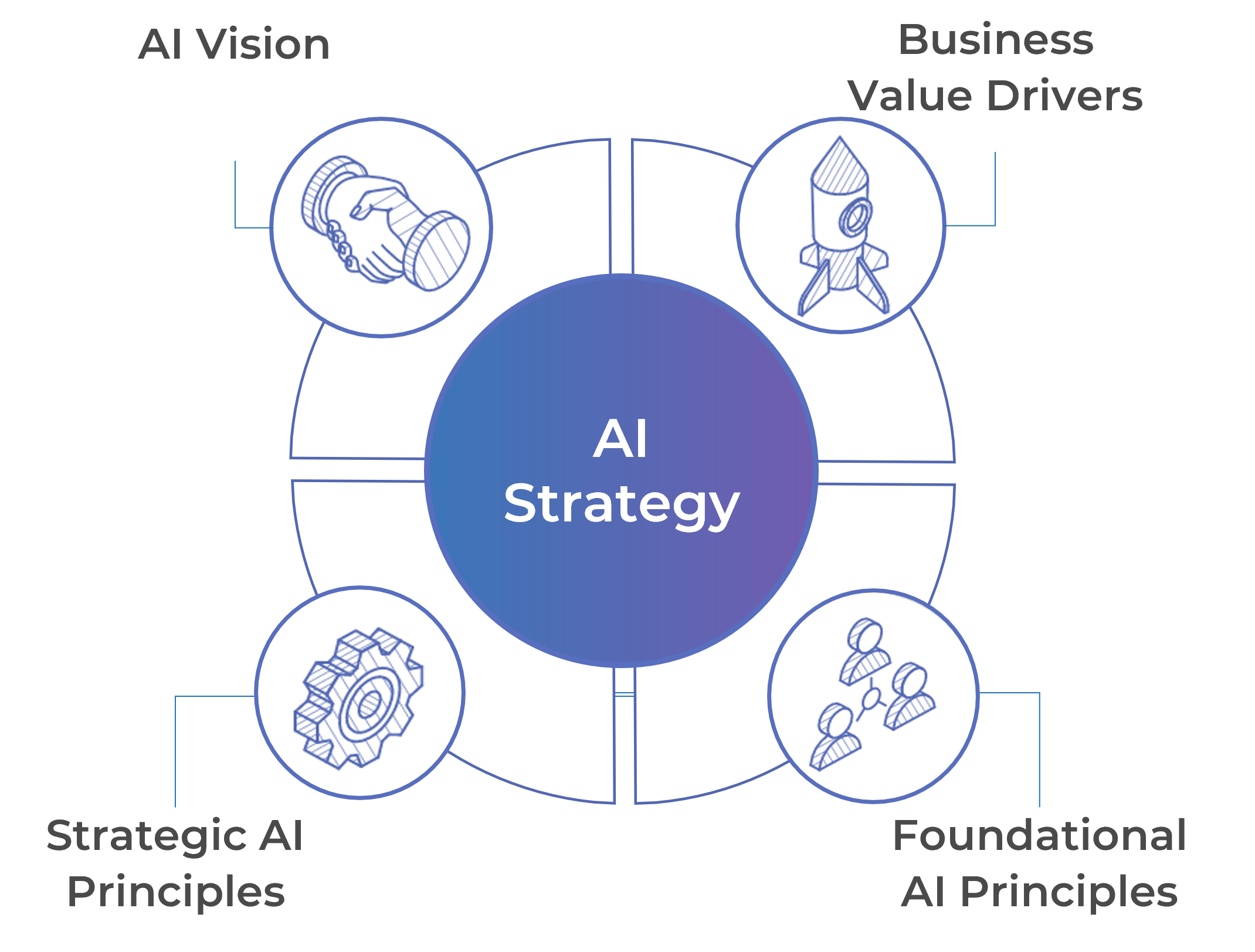
AI strategy is driven by organizational strategy and value drivers
A business-driven AI strategy is aligned with the organizational strategy of the firm. Key components of the AI strategy include:
- AI Vision: The AI vision statement is usually forward-looking and aspirational and reflects the organization’s commitment to leveraging AI to deliver positive and responsible outcomes.
- Value Drivers: These drivers represent the ways value is recognized by the organization and are used to ensure candidate AI initiatives are aligned to the goals and objectives of the organization.
- Strategic AI Principles: Strategic guiding principles align the business strategy with the AI strategy and reflect the organization’s overall approach to the use of AI.
- Foundational AI Principles: Foundational principles govern the development, deployment, and maintenance of AI applications to mitigate the possible risks from deploying AI-based applications.
Foundational AI principles address the risks associated with AI and are aligned with the organization’s guiding principles
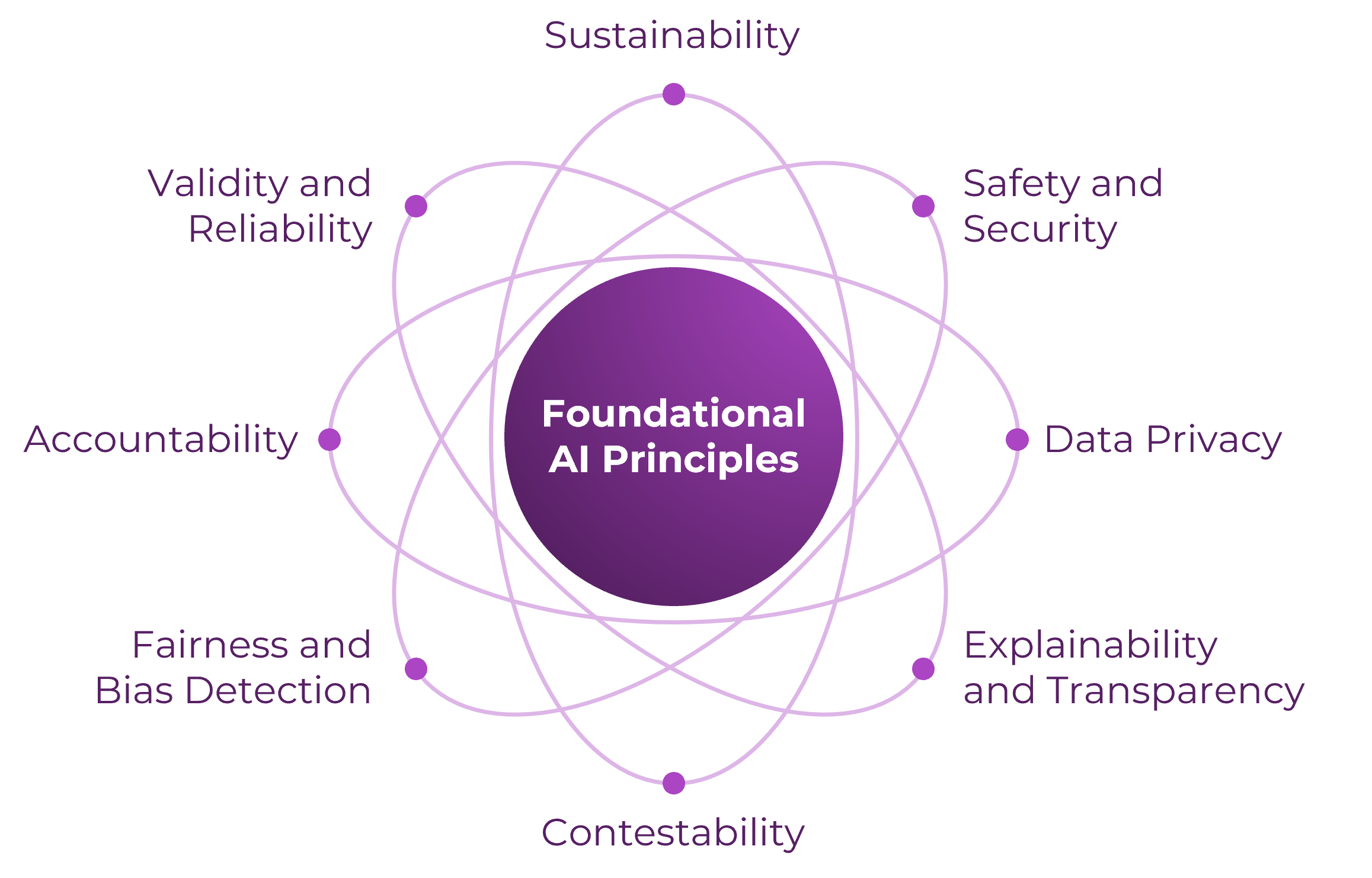
Foundational AI principles are selected and customized to reflect the organization’s guiding principles.
- Foundational AI principles should be core to the organization’s AI governance program.
- Foundational AI principles are used to identify risk categories for the organization’s AI risk management program.
Foundational AI principles continue to evolve as organizations’ enterprise governance requirements evolve
Candidate foundational AI principles to consider
-
Sustainability
Design AI systems to be more energy efficient. -
Human Agency and Autonomy
Use AI systems that augment human performance and enable independent actions. -
Environmental
Design AI systems to have positive environmental outcomes. -
Contestability
Enable individuals to challenge and seek redress for AI decisions that have impacted them. -
Intellectual Property
Ensure AI systems recognize intellectual property rights. -
Other
Additional principles that address compliance or are customized for the organization/industry.
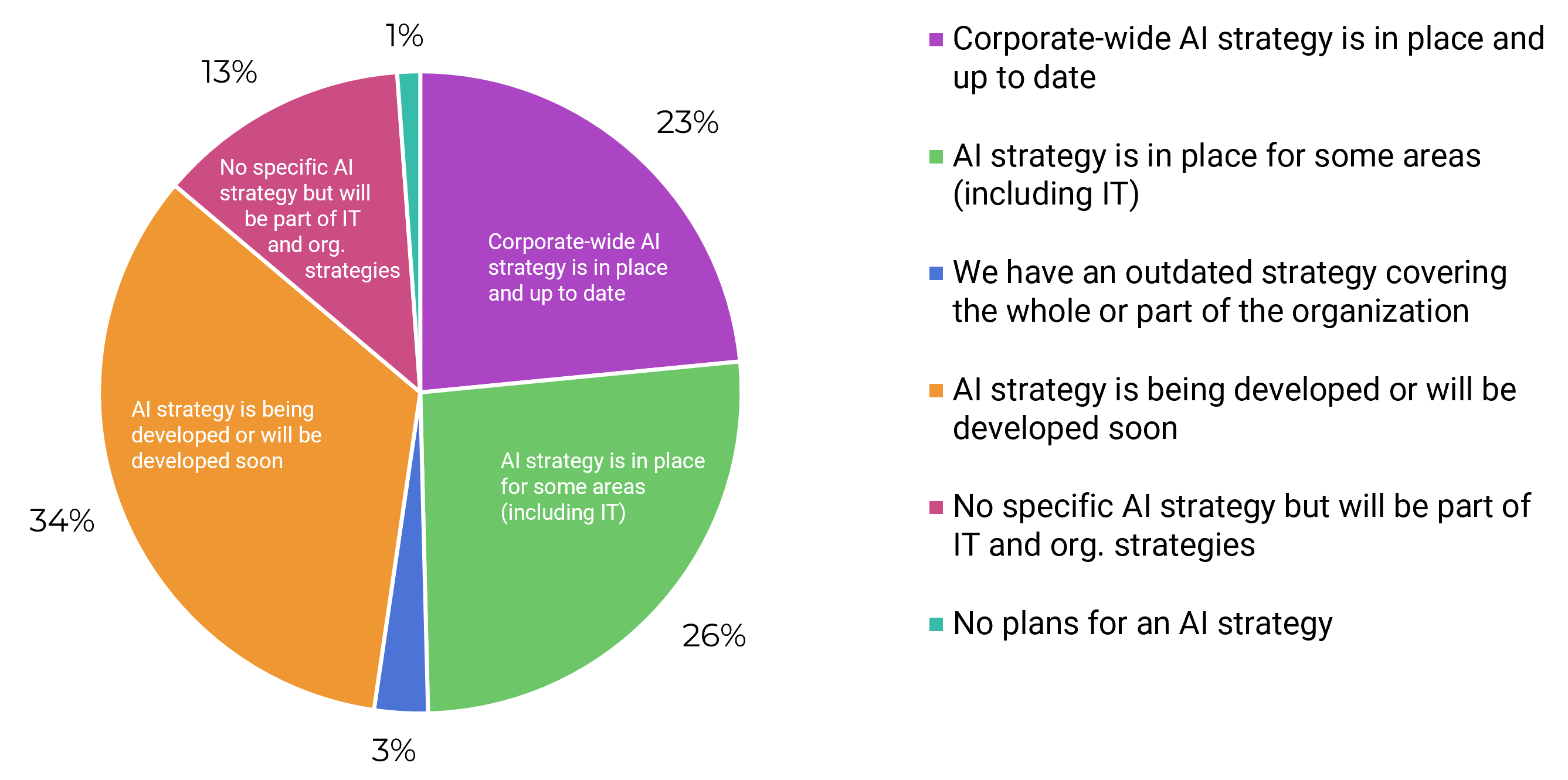
While developing a formal AI strategy is the growing trend, the majority have not established a formal organization-wide AI strategy
What best describes your organization’s approach to AI strategy?
(Source: Info-Tech Future of IT Survey, 2025; n=260)
INSIGHT
Although most organizations have or are developing an AI strategy, this is still relatively new for most.
- 23% of respondents said they have a corporate-wide AI strategy in place today (an increase of 15 percentage points compared to last year’s survey result).
- 26% said there is an AI strategy in place for some business areas (an increase of seven percentage points).
- 34% replied that their AI strategy is being developed or will soon be developed (a decrease of six percentage points).
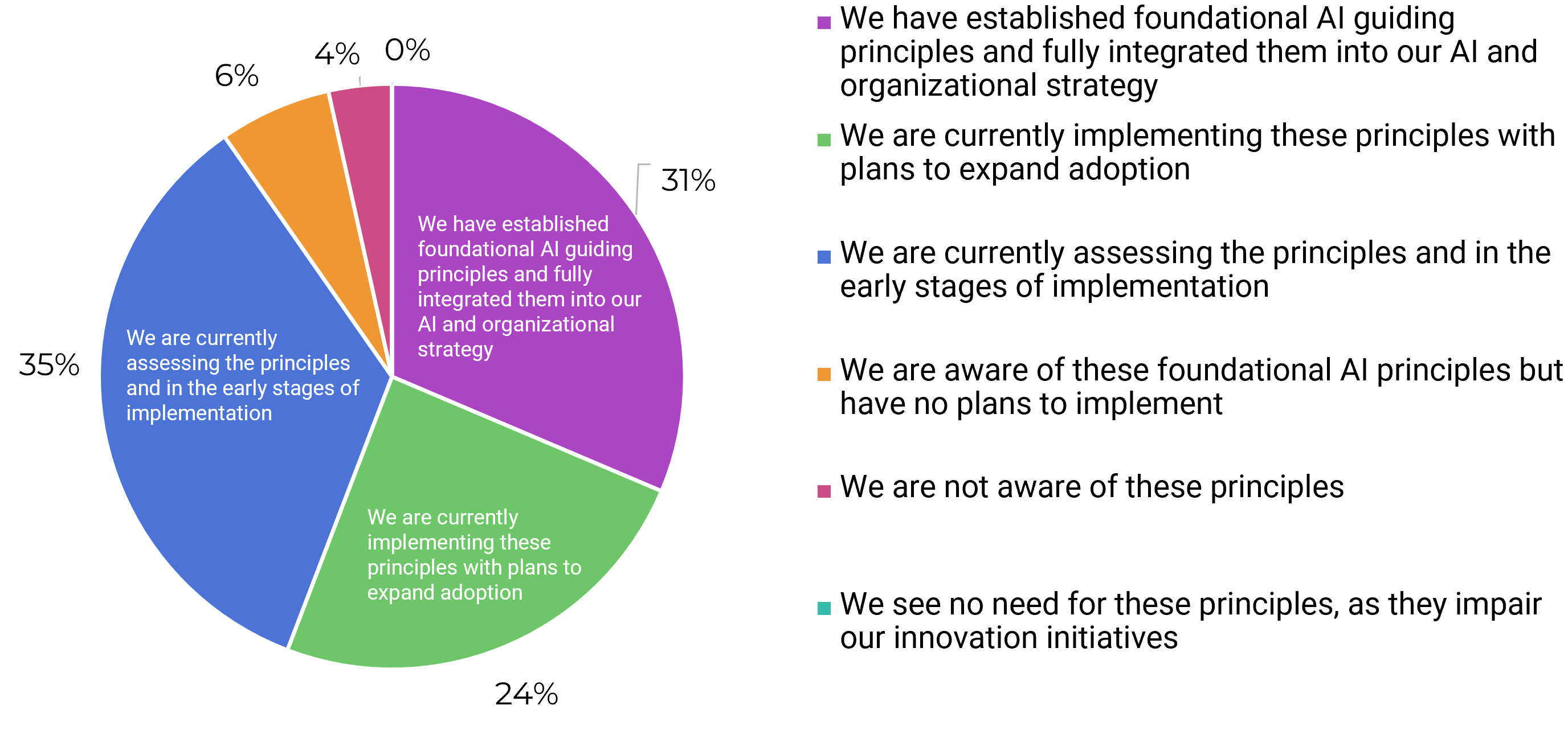
Organizations understand the need for foundational AI principles to address AI risks
What best describes your organization’s adoption of foundational AI principles (safety and security, data privacy, explainability and transparency, validity and reliability, fairness and bias detection, accountability)?
(Source: Info-Tech Future of IT Survey, 2025; n=258)
INSIGHT
Over half of respondents have implemented or are in the process of implementing foundational AI principles in their organization to address the possible risks associated with the introduction of AI applications.
No respondents viewed AI safeguards as an impairment to innovating with AI.
- 23% of respondents said they have a corporate-wide AI strategy in place today (an increase of 15 percentage points compared to last year’s survey result).
- 26% said there is an AI strategy in place for some business areas (an increase of seven percentage points).
- 34% replied that their AI strategy is being developed or will soon be developed (a decrease of six percentage points).
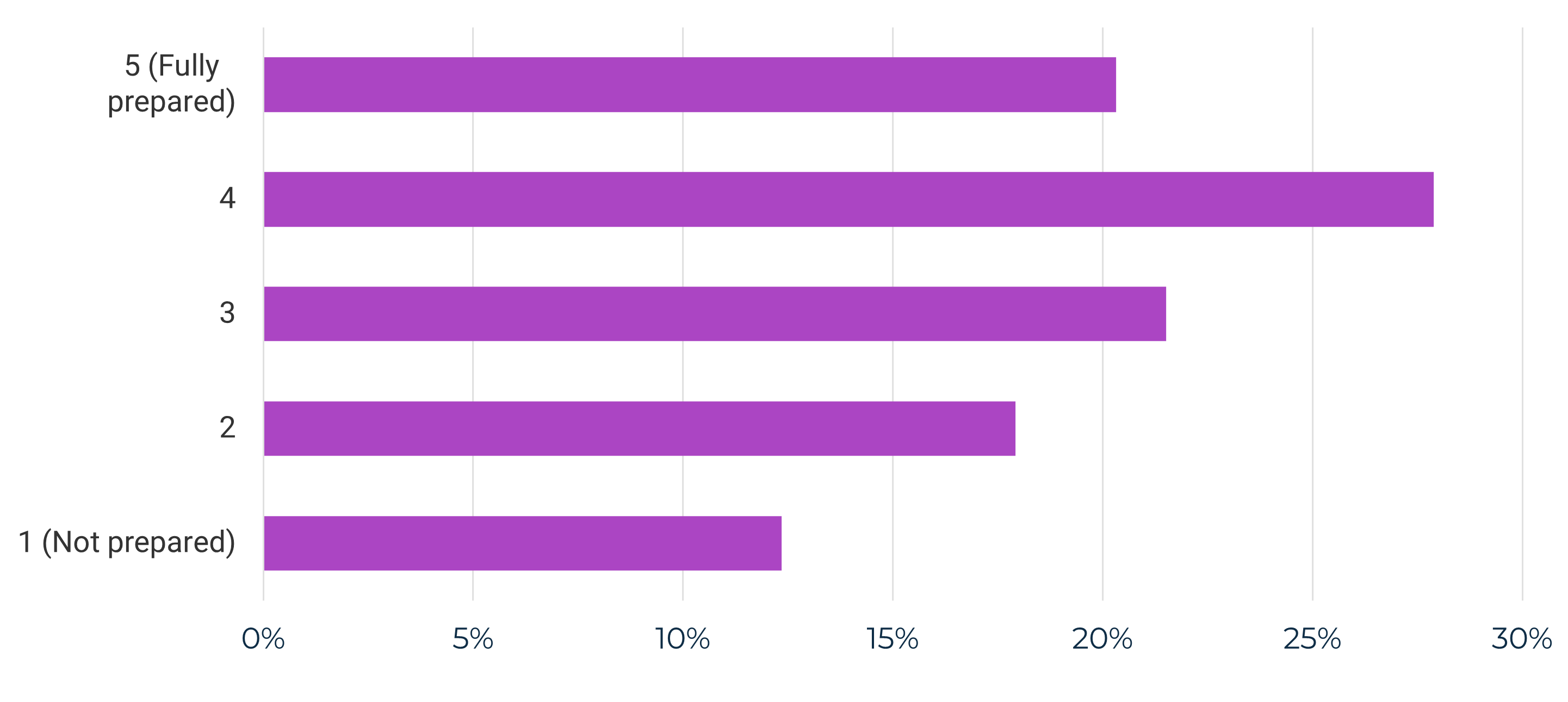
A majority of organizations feel that they are prepared to put their AI principles into practice
How prepared is your organization to put your foundational AI guiding principles into practice?
INSIGHT
Establishing foundational AI principles is a priority for the majority of respondents.
70% of respondents feel prepared (3) to fully prepared (5) to operationalize their foundational AI principles.
AI strategy is driving transformative opportunities and introducing new potential risks
Opportunities
- Accelerated AI deployments
- Improved customer experience
- Talent attraction and retention
- Innovation and growth
- Increased employee productivity and effectiveness
Risks
- Possible job displacement
- Overreliance on AI systems
- Creation of deepfakes for identity theft or fraud
- Misalignment with foundational AI principles
- Possible privacy breaches with the use and sharing of data
About Info-Tech
Info-Tech Research Group is the world’s fastest-growing information technology research and advisory company, proudly serving over 30,000 IT professionals.
We produce unbiased and highly relevant research to help CIOs and IT leaders make strategic, timely, and well-informed decisions. We partner closely with IT teams to provide everything they need, from actionable tools to analyst guidance, ensuring they deliver measurable results for their organizations.
What Is a Blueprint?
A blueprint is designed to be a roadmap, containing a methodology and the tools and templates you need to solve your IT problems.
Each blueprint can be accompanied by a Guided Implementation that provides you access to our world-class analysts to help you get through the project.
Talk to an Analyst
Our analyst calls are focused on helping our members use the research we produce, and our experts will guide you to successful project completion.
Book an Analyst Call on This Topic
You can start as early as tomorrow morning. Our analysts will explain the process during your first call.
Get Advice From a Subject Matter Expert
Each call will focus on explaining the material and helping you to plan your project, interpret and analyze the results of each project step, and set the direction for your next project step.
Unlock Sample Research Tech Trends 2025
 Define Your Digital Business Strategy
 Kick-Start IT-Led Business Innovation
 Establish a Foresight Capability
 Apply Design Thinking to Build Empathy With the Business
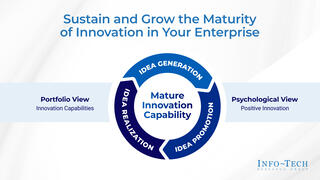 Sustain and Grow the Maturity of Innovation in Your Enterprise
 Position IT to Support and Be a Leader in Open Data Initiatives
 Double Your Organization’s Effectiveness With a Digital Twin
 Develop a Use Case for Smart Contracts
 Adopt Design Thinking in Your Organization
 Accelerate Digital Transformation With a Digital Factory
 Tech Trends 2024
 2021 Tech Trends
 Implement and Mature Your User Experience Design Practice
 CIO Priorities 2022
 2022 Tech Trends
 Into the Metaverse
 Demystify Blockchain: How Can It Bring Value to Your Organization?
 2020 Tech Trend Report
 2020 CIO Priorities Report
 CIO Trend Report 2019
 CIO Trend Report 2018
 CIO Trend Report 2017
 AI and the Future of Enterprise Productivity
 Evolve Your Business Through Innovation
 Build a Platform-Based Organization
 Tech Trend Update: If Contact Tracing Then Distributed Trust
 Tech Trend Update: If Biosecurity Then Autonomous Edge
 Tech Trend Update: If Digital Ethics Then Data Equity
 Tech Trends 2023
 Formalize Your Digital Business Strategy
 Select and Prioritize Digital Initiatives
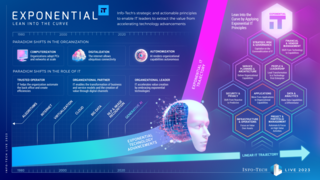 Adopt an Exponential IT Mindset
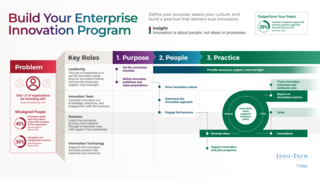 Build Your Enterprise Innovation Program
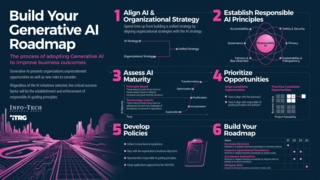 Build Your Generative AI Roadmap
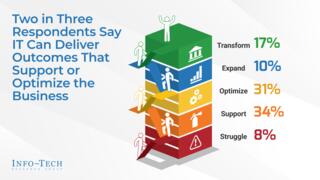 Annual CIO Survey Report 2024
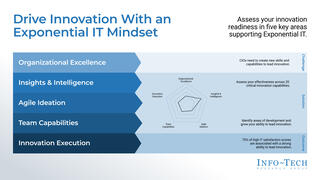 Drive Innovation With an Exponential IT Mindset
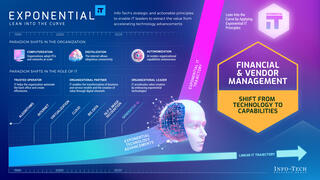 Exponential IT for Financial and Vendor Management
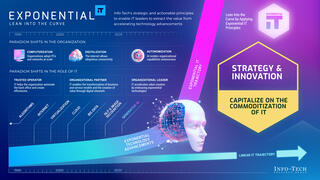 Exponential IT for Strategy, Risk, and Governance
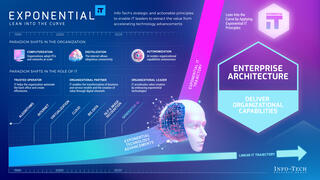 Exponential IT for Service Planning and Architecture
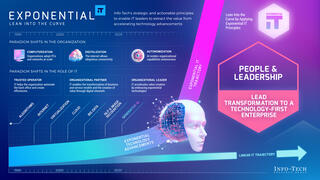 Exponential IT for People and Leadership
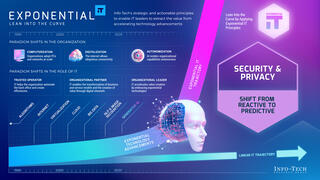 Exponential IT for Security and Privacy
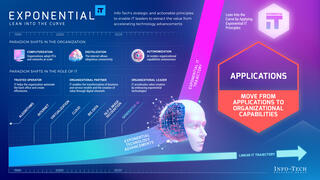 Exponential IT for Applications
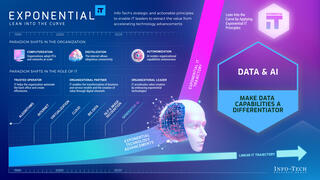 Exponential IT for Data and Analytics
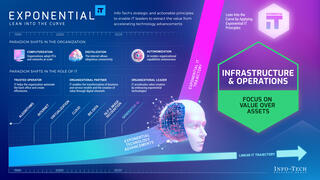 Exponential IT for Infrastructure and Operations
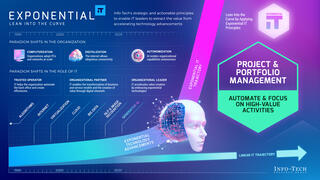 Exponential IT for Project and Portfolio Management
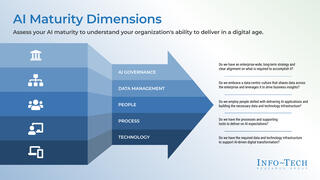 Assess Your AI Maturity
 Develop Responsible AI Guiding Principles
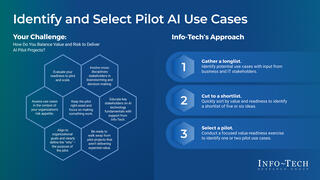 Identify and Select Pilot AI Use Cases
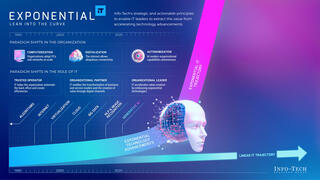 Exponential IT Keynote
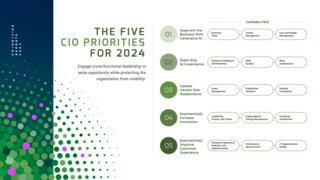 CIO Priorities 2024
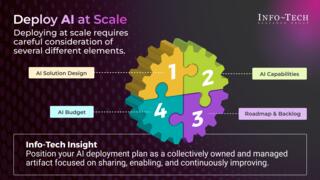 Build a Scalable AI Deployment Plan
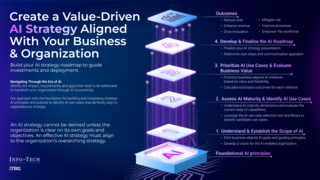 Build Your AI Strategy and Roadmap
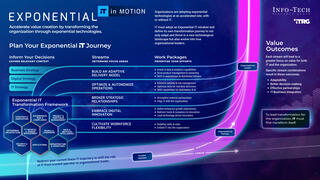 Develop an Exponential IT Roadmap
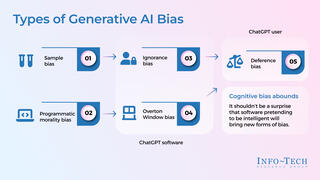 Use ChatGPT Wisely to Improve Productivity
 Build a FinOps Strategy to Enable Dynamic Cloud Cost Management
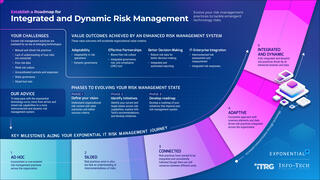 Establish a Roadmap for Integrated and Dynamic Risk Management
 Info-Tech’s Best of 2024 Mid-Year Report: AI Rewrites the Script for CIOs
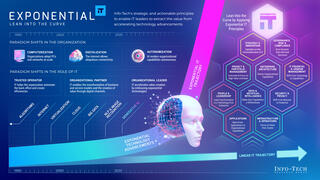 Explore the Art of the Possible for Exponential IT
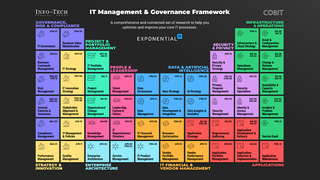 IT Management & Governance: The Next Evolution
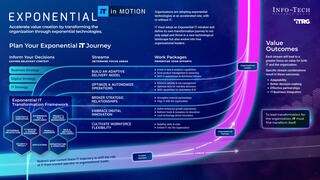 Bending the Exponential IT Curve Keynote
 Exponential IT in Motion: Transform Your Organization by Transforming IT
 AI Trends 2025
 LIVE 2024 Keynote Presentations
 LIVE 2024 Lightning Round Presentations
 CIO Priorities 2025
 Info-Tech’s Best of 2024 Report: IT Moves Into Position
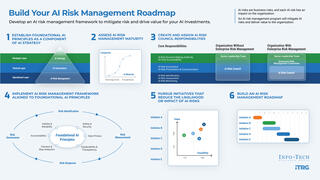 Build Your AI Risk Management Roadmap
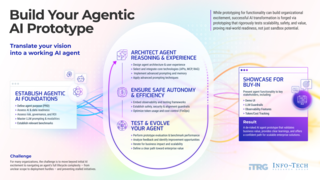 Design Your Agentic AI Prototype
 An Operational Framework for Rolling Out AI
 The AI Vendor Landscape in IT
 Run IT By the Numbers
 Building Info-Tech’s Chatbot
 Assessing the AI Ecosystem
 Bring AI Out of the Shadows
 Transform IT, Transform Everything
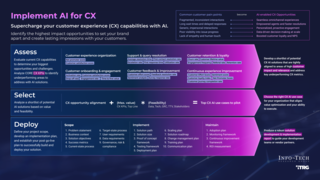 Implement AI for Customer Experience
 Info-Tech’s Best of 2025 Mid-Year Report: IT Moves From Disruption to Decisive Action
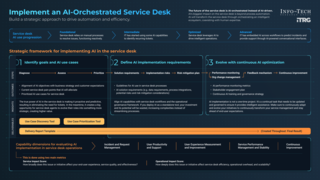 Implement an AI-Orchestrated Service Desk
 Info-Tech's All-Time Best, 2025 Edition: Change Is the Headline, Fundamentals Are the Path
 Tech Trends 2026
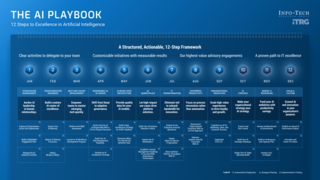 The AI Playbook
 AI Trends 2026
 Info-Tech’s Best of 2025: The Year AI Stopped Being a Project and Became the Strategy
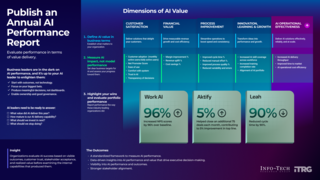 Publish an Annual AI Performance Report
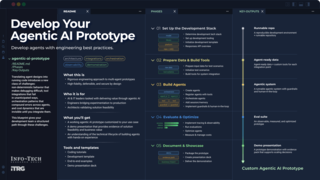 Develop Your Agentic AI Prototype
 Changing Landscape: Rethinking Vendor Decisions in the Agentic AI Era
 AI in Seven Charts
 Emerging AI Trends and Predictions From Our Global Technical Counselor Team
 Turn Customer Friction Into Agentic Opportunity
 People Change in the Face of Disruptive Technology
 Lead IT Like a Business: Every Dollar Is a Decision
 Optimize Cloud & AI Spend With Agentic FinOps
 Leadership Summit: The Ultimate Onboarding Experience 2026
 Resilience Is Not Planned – It Is Architected
 Redefine What It Means to Be CIO
 Navigating AI Agents in Service Management
 Influence Unleashed: The IT Leader’s Superpower
 The Challenge of Ethics in the Use of AI
 Revolutionize Risk Management With Agentic AI
 Introducing the Info-Tech Speakers Bureau
 Inside the Agentic Enterprise
 Agents 2.0: From Autonomy to Architecture
 Agentic IT: From Hype to Value
 Tech Trends 2027 Keynote
 Become an Exponential CIO
 Beyond the Agent: The Leadership Ecosystem for an AI-Enabled World
 Five Key Takeaways From Info-Tech LIVE 2026
 Info-Tech’s Best of 2026 Mid-Year Report
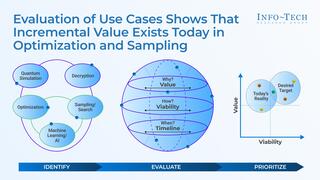 Identify and Evaluate Quantum Computing Use Cases
 AI Adoption & Impact Study: AI in Software Development June 2026 Top 10 Insights
 AI Adoption & Impact Study: AI in the Enterprise June 2026 Top 10 Insights